
Expensive stories; Baller lessons; Scrooge McDuck; Shovel sales up; ITV adds ads; General Ludd; Michael Johnson's creditors;
Overthinking the sports business, for money
The Most Expensive Stories in Sport
I’ve been asking as many people as I can find the same question: what’s the most expensive story in sports marketing?

By this, I mean, what narrative does the money want to hear when being pitched a new sports product?
The answers are varied, but the top three are:
Gen Z attention spans
Sport as entertainment
Creator economy
Each of these stories have made the transition from podcast chat to Powerpoint deck, from ‘I’m just spitballing here’ to sports industry received wisdom.
They come with supportive case studies which suggest momentum, and if you squint a bit they can look like proof of concept.
When presented well, these narratives have the power to unlock the huge piles of other people’s money, ‘dry powder’ in bankwank speak, that’s currently sitting in specialist sports funds and private equity vaults.
This situation is best illustrated by a Scrooge McDuck gif.
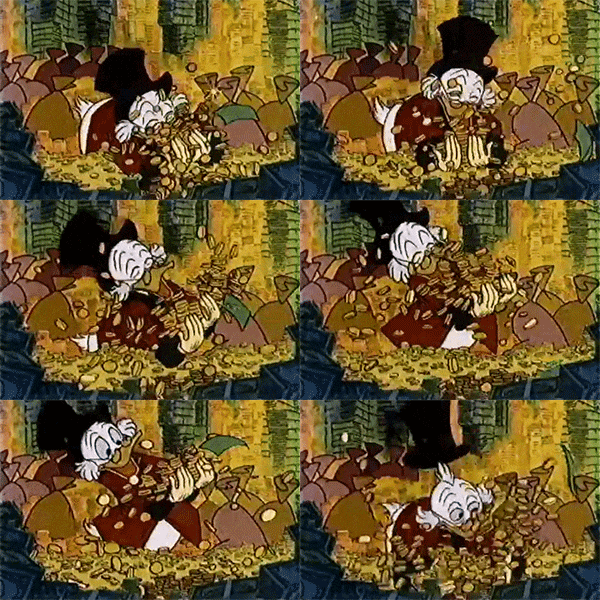
Over the course of 2026 bets will be laid, billions will be deployed and most of the money will be lost.
The sports industry knows this.
So all across town, the consultants and agency chiefs are positioning themselves to nab some of the moolah as the gravy train passes through.
At the front of the queue is George Pyne, who has raised a billion quid of OPM and made it clear that he’s buying shovel makers, aka the ‘sports ecosystem’, which means data firms, supplier consultancies and betting supply chain technology. This is where he thinks the money will stick.
Listen to this next clip. It doesn’t sound like he’s gonna be buying an NBA Europe franchise anytime soon.
On the other side are the rights holders, and wannabe rights holders, all busily creating new IP aimed at unlocking McDuck’s box of coin.
To get at the money, ‘sport’ must enter a Squid Game inspired race to create shorter, less interesting versions of themselves aimed at people who have hitherto shown absolutely no interest.
Meanwhile, sitting watching all this is the core sports fan, the one who pays for tickets and telly subscriptions, who is now cast as an impediment to progress.
The apparent decline of Baller League in Germany is a useful moment. My view is that it wasn’t the ‘future of football’ in 2024 and isn’t the ‘death of creator led sport’ now.
Every directional trend eventually meets local context, existing fan culture, and the stubborn reality that audiences aren’t spreadsheet cells waiting to be optimised.
The most expensive stories in sport aren’t the ones that failed. They’re the ones that succeeded once, got mistaken for universal truth, and inspired a generation of imitators holding someone else’s money.
See also:

Help Wanted: Anyone speak AI?
I didn’t think ‘Sport’s Napster Moment’ would be like this tbh.
Make my logo bigger, cont’d
ITV is running ads in to the live feed for the Six Nations, a ploy to make back the outlay on its four-year deal which sees it coughing for the two thirds to a third split deal with the BBC. The fee was £63m between them, with ITV airing 10 of the competition’s 15 matches each year, including every England game. This is part of the channel’s ‘home of rugby’ shift, which also sees them pay £80m a year for exclusive rights for every game of the Nations Championship, the new 12-team competition featuring the Six Nations and their major southern hemisphere rivals – South Africa, New Zealand, Australia, Argentina, Fiji and Japan – which begins this summer.
Previous newsletters suggest the increase in ad load is the new normal.
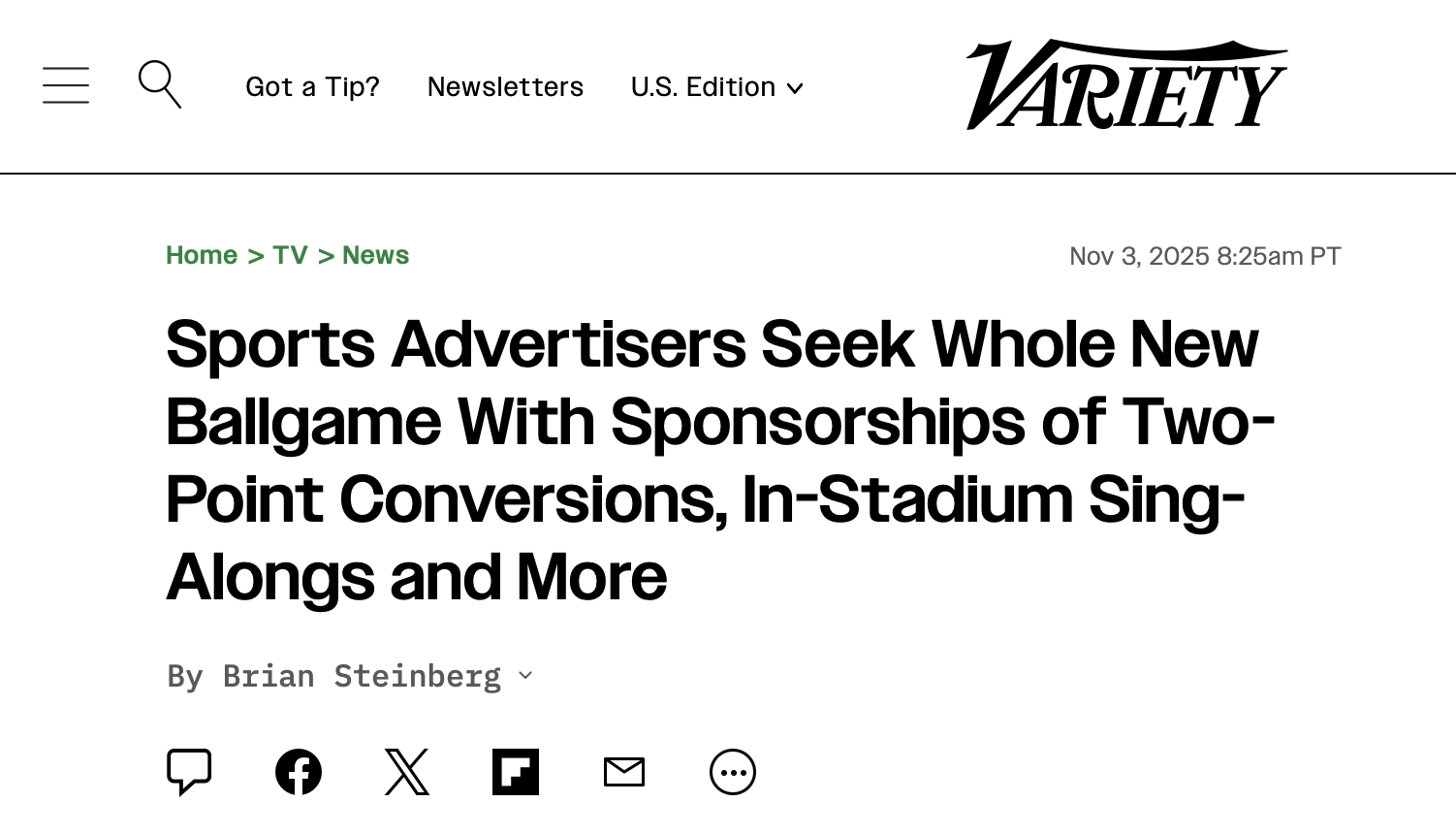
Variety reports on the pressure to get brands in to the live feed. A story as old as advertising has existed.
See also, product placement is getting so blatant it’s making us laugh…Netflix’s hot rabbi romcom Nobody Wants This was an ad with some acting attached.
Each of these three stories are about the deep worry on the brand side that their route to the consumer is blocked.
In each case the answer is a variation of make my logo bigger.
Meanwhile, the consumer pays twice, once with money, then again with their attention and the irritation at having their thing covered in ads.
But who pays for the content if the ads don’t work, is the cry.
The answer is obvious, but one that nobody on the publisher side wants to hear: Control costs. Stop overpaying for talent. Grow a pair.
See also:
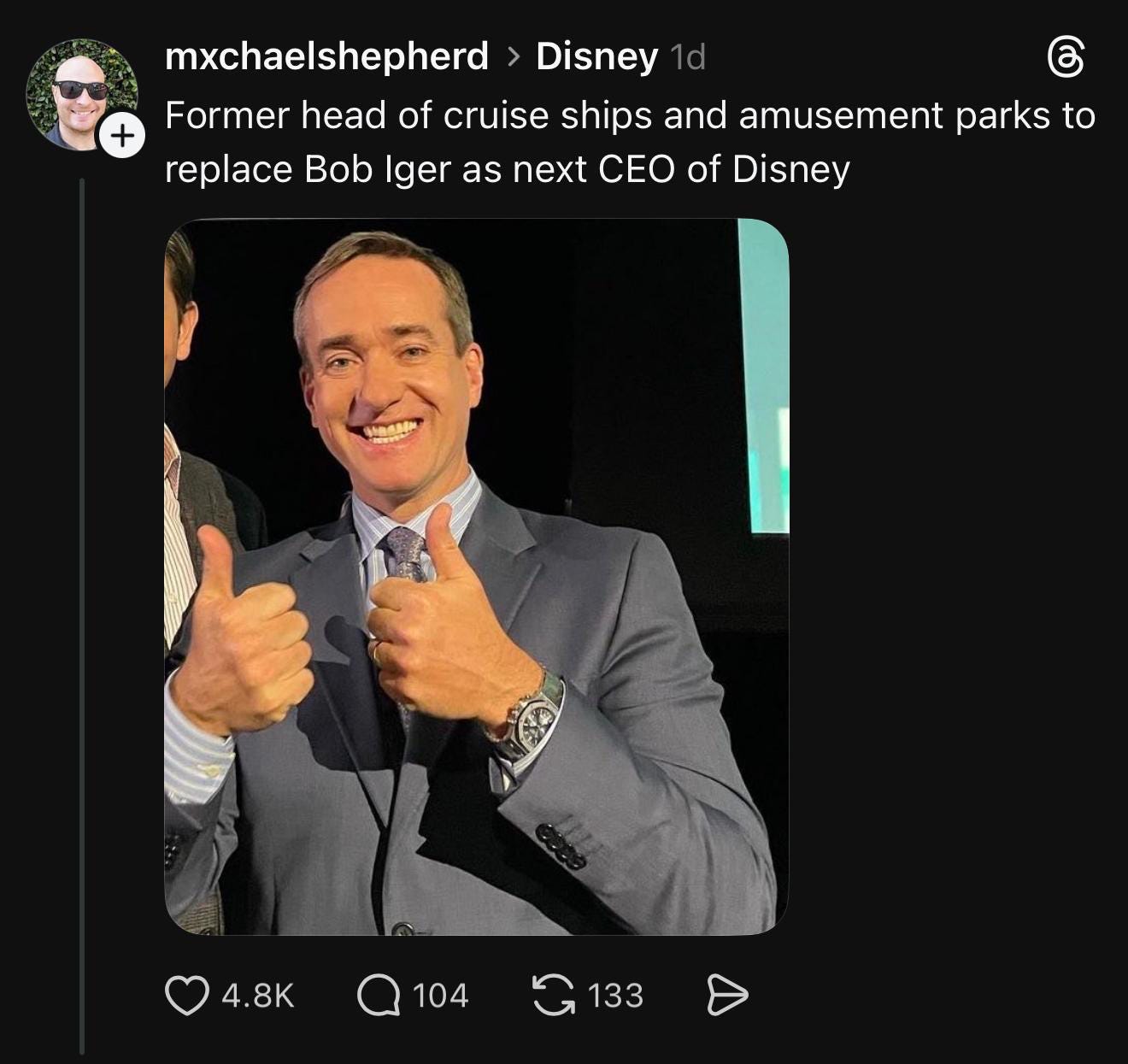
Meanwhile, at Disney…
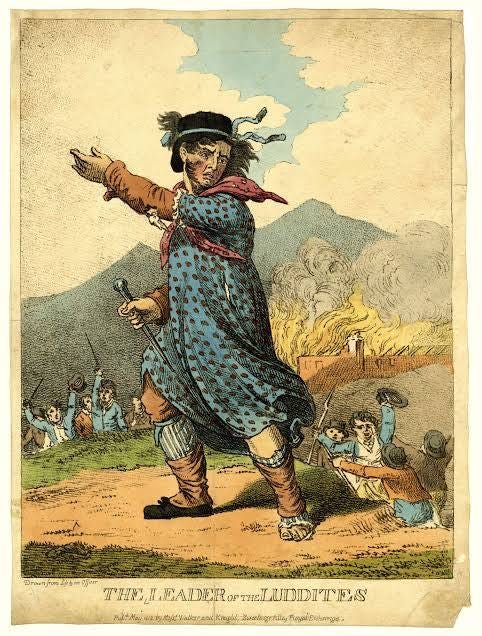
Really astute observation about how narratives become capital magnets. The Scrooge McDuck analogy is spot on for how these stories unlock dry powder but the shovel maker strategy is facinating. I've noticed similar dynamics in tech where infrastructure plays outlast the flashy consumer products. The comparison betwen core fans and General Ludd captures something important about who gets sacrificed when chasing theoretical audiences.